
Why You Can’t Sleep — How Kinesiology Helps Rest & Heals Insomnia
How Kinesiology Supports Nervous System Balance
Sleep serves our body on every level: molecular, energy balance, as well as intellectual function, alertness and mood. Many people who come in to my clinic suffer from some form of insomnia. Often it's present for years, and many have accepted it as a part of their life. But it can have serious short and long-term impacts upon physical & mental health. With lack of sleep, the immune system is weaker and inflammation is higher; the ideal environment for chronic disease.
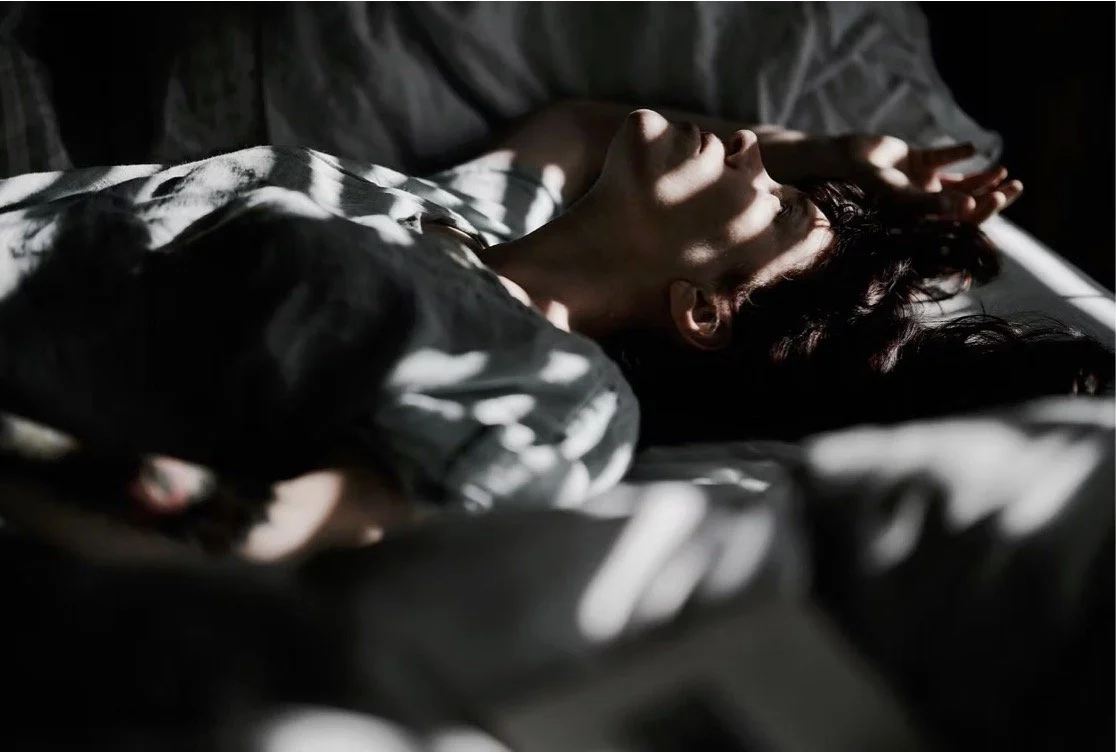
Kinesiology supports nervous system balance and restful sleep
Some people with insomnia have difficulty in dropping off to sleep. Others wake up in the night wide awake and just cannot get back to sleep. Sometimes both forms of insomnia are present! For many there are feelings of helplessness in the face of insomnia. A stress response begins at the mere thought of going to bed which only makes it the condition worse.
I had a serious bout of insomnia in my early 30's. It lasted for 6 months and I thought I was going to lose my mind. I tried herbs, lavender baths, deep breathing, meditation, you name it. It was truly awful. Later I had a baby and was up all through the night feeding her and putting that damned dummy back in her mouth! I can barely remember that period of time, my cognitive function was so impaired. Thankfully these days it only pops up occasionally to wave a red flag that my stress-levels are too high.
The autonomic nervous system (ANS) takes care of our involuntary functions, like breathing, metabolism and digestion. It has two divisions that function like operating speeds.
1) The sympathetic nervous system (SNS)
Generally speaking the SNS prepares the body to respond to a stressful situation. It does this by stimulating stress hormones, increasing the heart rate and redirecting blood flow away from non-essential systems like digestion, immunity and reproductive function. The blood flows instead to the big muscles getting us ready to physically respond to threat.
2) The parasympathetic nervous system (PNS)
Controls body process during ordinary situations. Generally, the parasympathetic division conserves and restores. It slows the heart rate and decreases blood pressure. It stimulates the digestive tract to process food and eliminate wastes. Energy from the processed food is used to restore and build tissues.
Ideally we move between these two divisions of the ANS appropriately and smoothly. What I most often observe in people with insomnia is a hyperarousal of the sympathetic nervous system. They are 'stuck' in the SNS and can't switch gears to relax. Often they will also present with digestive issues, lowered immunity and in women there may be reproductive issues, like PMS, infertility, PCOS or endometriosis; all symptoms of an over-active SNS.
The cause of a hypervigilant SNS is different for each person and kinesiology is an extraordinary tool to identify and address each unique case of insomnia. It's a beautiful thing to watch a person's relief and their return to vitality as the ANS is re-set through kinesiology treatment. A healthy functioning ANS can have many many health and wellbeing benefits beyond quality sleep, including better digestion, improved immunity and a healthy, functioning reproductive system for women. These often come as an indirect but welcome consequence of treating the insomnia with kinesiology.
It's rarely just one thing
While a hyperactive sympathetic nervous system is often at the centre of insomnia, it's usually not acting alone. In clinic, I typically see it showing up alongside — or being driven by — one or more of these:
Survival mode. Fight-or-flight activation that hasn't switched off — hypervigilance, difficulty winding down even when the day's "threats" are long gone.
Hormonal changes. Melatonin disruption, cortisol imbalance, or the hormonal shifts of perimenopause and menopause can all interfere with sleep independently of stress levels.
Stress and emotional load. Anxiety, overwhelm, or unresolved emotional stress that hasn't been processed — carrying more than the nervous system can hold.
Overthinking and rumination. Racing thoughts, replaying conversations, planning tomorrow at 2am — the mind staying "on" long after the body should have switched off.
Lifestyle factors. Screen time, caffeine, shift work, irregular routines, and alcohol intake all place additional load on an already-taxed system.
Everyone's insomnia is a different combination of these. That's exactly what kinesiology is suited to — not treating "insomnia" as a single condition, but using muscle testing to identify your specific combination of stressors, so we can address what's actually driving it rather than guessing.
If you or someone you know suffers with insomnia I am here to offer the support you need. Please get in touch or book a session. Let's get you sleeping!